
When Residential Projects Go Wrong in Ontario

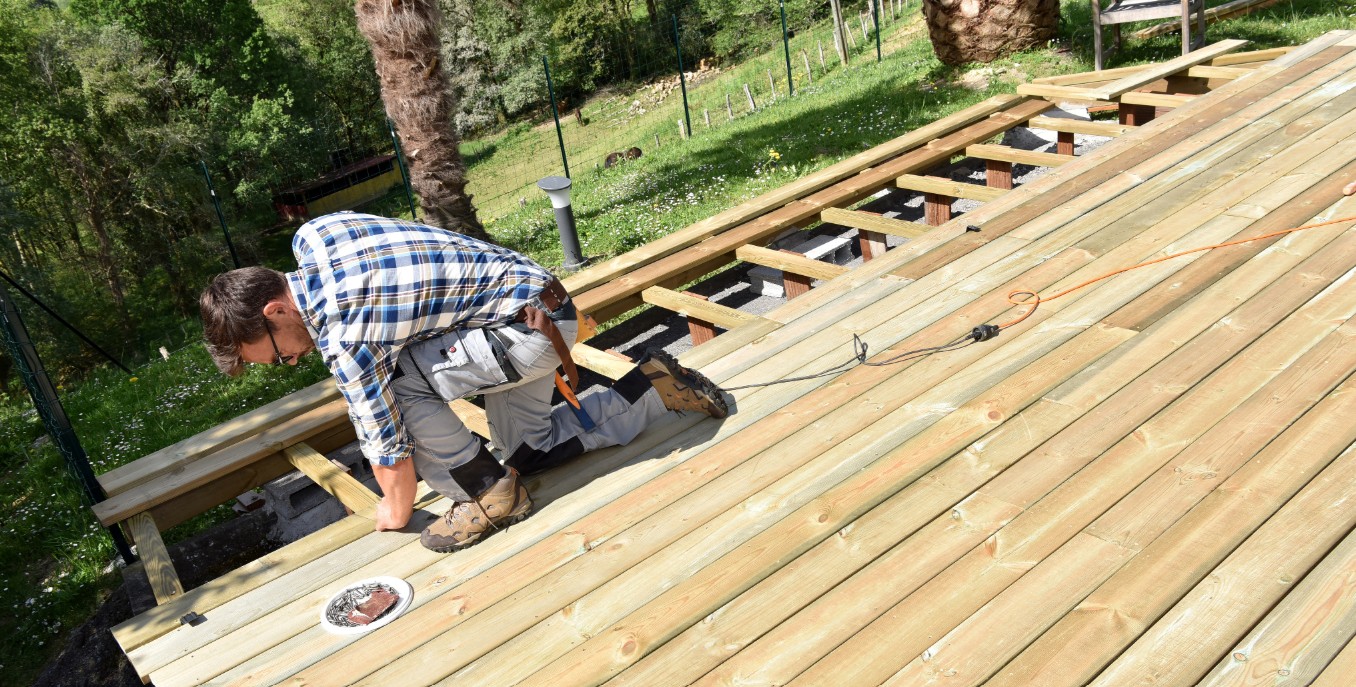
Your Contractor Built Over the Property Line in Ontario. Who Is Accountable?
You hire a contractor to build a deck, fence, retaining wall, pool, shed or addition. The work is finished, the invoice is paid, and then your neighbour knocks on your door saying there is a problem.
Part of the project crosses the property line, or maybe the required setback was not followed, and your project was built too close to the property line.
So, who is accountable, the homeowner or the contractor?
There is no single answer that applies to every situation. What matters is how the project was planned, what the contractor agreed to do, and whether the property boundary was properly established before construction began.
But homeowners should understand one important reality: it is your property, so you need to make sure the people working on it have reliable information about where they are building.
A Contractor Is Not a Land Surveyor
This is where things can get confusing.
You hired a professional. They build decks, fences, pools or retaining walls all the time, so it is reasonable to expect them to know what they are doing. However, knowing how to build something properly is not the same as knowing exactly where the legal property line is.
A contractor may be excellent at construction, a landscaper may have years of experience, and a pool company may complete hundreds of installations. None of that makes them qualified to determine your legal property boundary.
In Ontario, only an Ontario Land Surveyor is qualified to provide a professional opinion on the location of a legal property boundary.
That matters because a lot of projects go wrong when someone simply assumes they know where the line is. Maybe there is an old fence, and everyone assumes the fence sits on the boundary. Maybe the homeowner says, "I think the line runs along this hedge." Maybe the contractor sees what looks like a survey bar and assumes they can work from there.
The problem is that none of those things should automatically be treated as proof of the legal boundary.
If the exact property line matters to the project, an Ontario Land Surveyor should be involved before construction begins.
But I Hired the Contractor to Take Care of Everything
This is probably where many homeowners get frustrated.
You hired someone because you did not want to manage every technical detail yourself, and that is completely understandable. You do not need to become a surveyor or a construction expert, but you do need to understand what process your contractor is following before work starts.
If the project is being built close to a property line, ask what information they are relying on. Are they working from a land survey? Has the boundary been professionally established? Does an Ontario Land Surveyor need to stake the line before construction? What setback applies to the project, and who is responsible for arranging the surveying work?
These are not unreasonable questions. They are part of making sure the project is being built in the right place.
If the contractor says, "Don't worry, we have a surveyor we use," that may be perfectly fine, but be sure to ask what that actually means. Will an Ontario Land Surveyor be attending the property? Will the boundary be staked? Is the contractor building from a proper survey or site plan?
Those details matter a lot more than most people realize.
What If the Contractor Said They Would Handle the Surveyor?
This is where the question of responsibility becomes more complicated.
Suppose your contractor tells you they will arrange for an Ontario Land Surveyor to establish the property line before work begins, and you agree to the project based on that understanding. Then the surveying work never happens and the contractor builds in the wrong location.
That is very different from a homeowner pointing to an old fence and saying, "That's the property line, you can build it there."
It is also different from a contractor ignoring survey stakes or building somewhere other than the location shown on the plans.
This is why it is important to have these responsibilities in writing. If the contractor is arranging the surveyor, put that in the contract. If the project is supposed to be built from a survey or site plan, make sure that is clear. If the contractor is responsible for following a staked boundary, everyone should understand that before work begins.
If something does go wrong later, contracts, emails, survey information and plans can all become important when determining what happened.
What If the Project Is Not Over the Line, Just Too Close to It?
That can still be a problem.
A structure does not have to physically cross onto your neighbour's property to create a boundary-related issue. It may also be built inside a required setback.
Municipal zoning by-laws can require certain structures to be a minimum distance from a property line, and those requirements can vary depending on the municipality, the property and the type of project.
For example, if the applicable rule requires a structure to be four feet from the property line, but it is built only two feet away, there may be a setback problem even though the structure is still entirely on your property.
This is why both pieces of information matter. You need to know what setback applies, and you need to know where the property line actually is. One without the other is not enough.
Homeowners should verify the applicable requirements with their municipality before construction begins.
So Whose Fault Is It?
The answer depends on what happened.
Did the homeowner give the contractor incorrect information about the property line? Did the contractor say they had arranged a surveyor when they had not? Were survey stakes ignored? Was the contractor given a proper plan but built in a different location? Was everyone relying on an old fence that nobody had ever confirmed was actually on the boundary?
Those are very different situations.
If a serious boundary dispute has already developed, an Ontario Land Surveyor may be needed to establish the boundary, and a qualified Ontario lawyer may be needed to advise on legal responsibility.
But from a homeowner's point of view, there is a simpler lesson. Do not wait until the project is finished to find out what your contractor used to determine where to build.
Ask before work starts.
Make sure the property boundary has been properly established, make sure any required setback is understood, and make sure the contractor knows exactly what information they are building from, and get every agreement documented either on paper or in an email.
You do not have to do the surveying yourself, but you do have to make sure the right professionals are involved.
When the boundary, setback requirements and construction plan are dealt with before work begins, there is a much better chance the project ends where it should, without a knock on the door from your neighbour afterward.
This article is for educational purposes only and should not be used as legal advice.
Looking for Your Property Documents?
Visit ProtectYourBoundaries.ca to see what property documents and products are available for your address, including existing survey plans and BoundaryPLUS Property Reports.
Our BoundaryPLUS reports can help homeowners, buyers, and sellers better understand important property information, including registered easements, rights-of-way, and other title-related details.
Not sure what you are looking for, or have questions about a property? Contact our team for more information.
Like our content? Click here to have Google show you more Protect Your Boundaries results
You May Also Like
A Few Inches Over the Property Line, and a $150,000 Legal Bill
Land Surveys for Fencing: Everything You Need to Know Before You Build
How Can I Tell Where My Property Boundary Is?








Protect Your Boundaries Inc. is a licensed member of the Association of Ontario Land Surveyors, and is entitled to provide cadastral surveying services to the public of the Province of Ontario in accordance with the provisions of the Surveyors Act R.S.O. 1990, Chapter S29.