
A Few Inches Over the Property Line, and a $150,000 Legal Bill

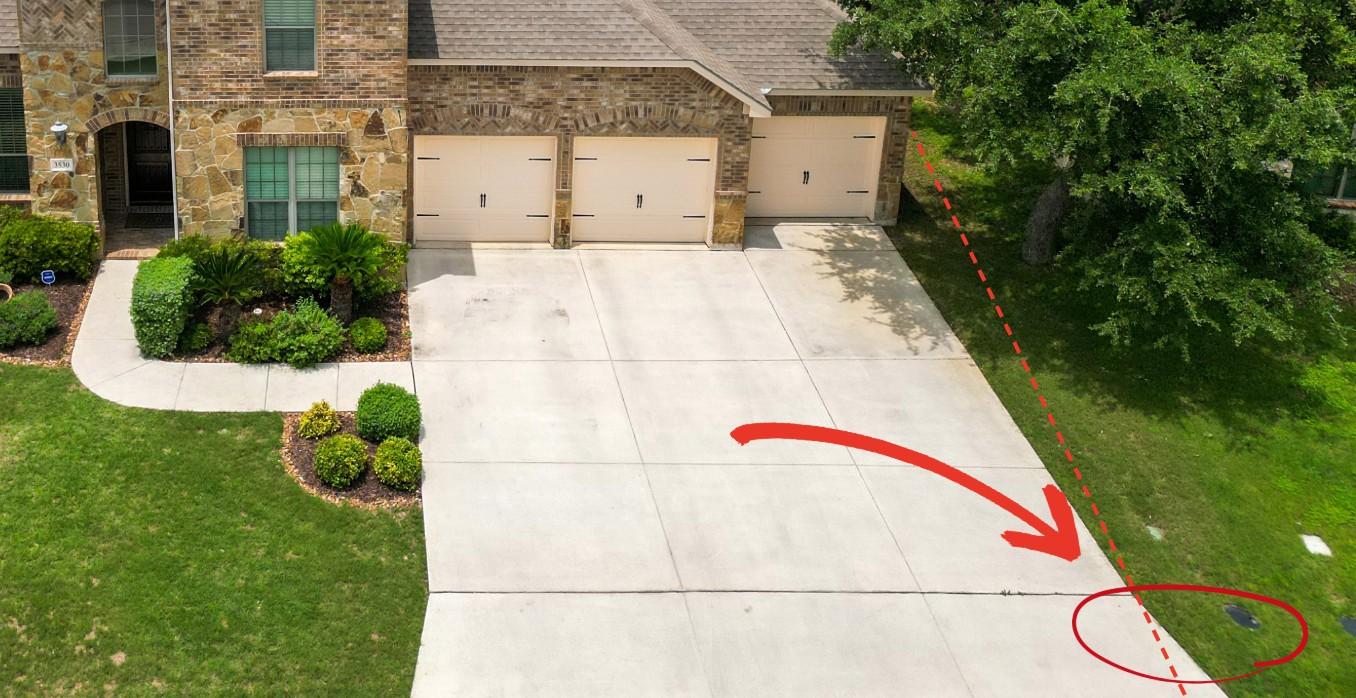
A few inches of concrete may not seem like much, but in Waterloo, Ontario, a dispute over a small driveway encroachment reportedly led to years of conflict, two lawsuits, a four-day trial and legal fees estimated at close to $150,000.
The case was recently highlighted by Toronto real estate lawyer and Toronto Star columnist Bob Aaron in his August 24, 2026, article, “These Waterloo neighbours went to trial over a few inches of concrete. It cost them $150,000 in legal fees.”
For Ontario homeowners, the lesson is simple: know where your property line is before you build near it.
A Small Encroachment Becomes a Big Dispute
According to Aaron, the dispute involved a concrete extension beside a driveway. The neighbouring homeowners believed part of it crossed onto their property.
A Surveyor’s Real Property Report (SRPR) prepared by an Ontario Land Surveyor later confirmed that the concrete did cross the boundary, but only by a few inches. The encroaching concrete was removed, and the court ultimately declared the legal boundary to be where the survey showed it.
That is an important point.
Fences, driveways, landscaping and other visible features may suggest where a property line is, but they are not a substitute for proper survey information. A land survey helps replace assumptions with measured information.
A Visual Reminder of How Small the Issue Was
Due to copyright laws, the illustration below is not the actual survey from the Waterloo case. It is a simplified educational graphic created to show the relative scale of the type of narrow encroachment (highlighted in yellow) described in the case.
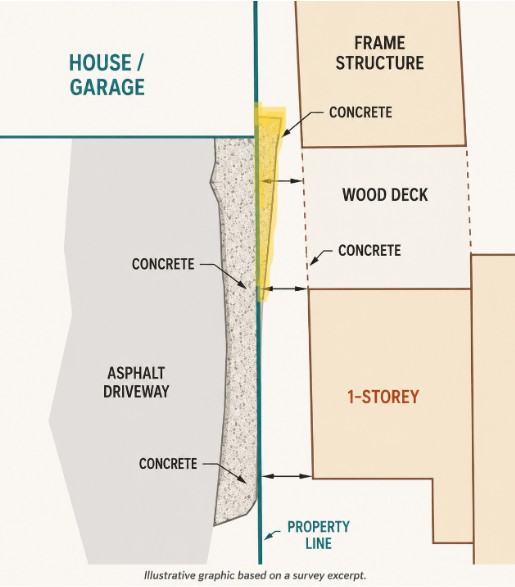 |
The contrast is what matters. The physical area in dispute was small, but the consequences were not.
Legal fees were reported to be around $150,000 in total, with neither side receiving a damage award. Each side was left to pay its own legal costs. That is a very high price to pay for a dispute over mere inches of land.
Check Before You Build
Before widening a driveway, installing a fence, building a shed or deck, planning an addition, or placing other improvements near a property line, homeowners should understand exactly where that boundary is.
Otherwise, a project may need to be altered or removed later, or it may trigger a dispute that costs far more than the original work.
Owning a copy of your land survey gives you a better starting point. It can help you understand your lot, your boundaries and how existing improvements relate to them.
An older survey will not answer every question for every future project. Conditions can change, and some situations may require updated survey work from an Ontario Land Surveyor, but having an existing survey available is far better than relying on memory, assumptions or the location of a fence.
If a boundary issue is unclear, speak with a qualified Ontario Land Surveyor. If the matter involves legal rights or a dispute, consult a qualified lawyer.
The Waterloo case is a useful reminder that a very small boundary issue can become a very expensive problem when it is not resolved early.
Looking for Your Property Documents?
Visit ProtectYourBoundaries.ca to see what property documents and products are available for your address, including existing survey plans and BoundaryPLUS Property Reports.
Our BoundaryPLUS reports can help homeowners, buyers, and sellers better understand important property information, including registered easements, rights-of-way, and other title-related details.
Not sure what you are looking for, or have questions about a property? Contact our team for more information.
Like our content? Click here to have Google show you more Protect Your Boundaries results
You May Also Like:










Protect Your Boundaries Inc. is a licensed member of the Association of Ontario Land Surveyors, and is entitled to provide cadastral surveying services to the public of the Province of Ontario in accordance with the provisions of the Surveyors Act R.S.O. 1990, Chapter S29.