
When Government Land Meets Your Backyard

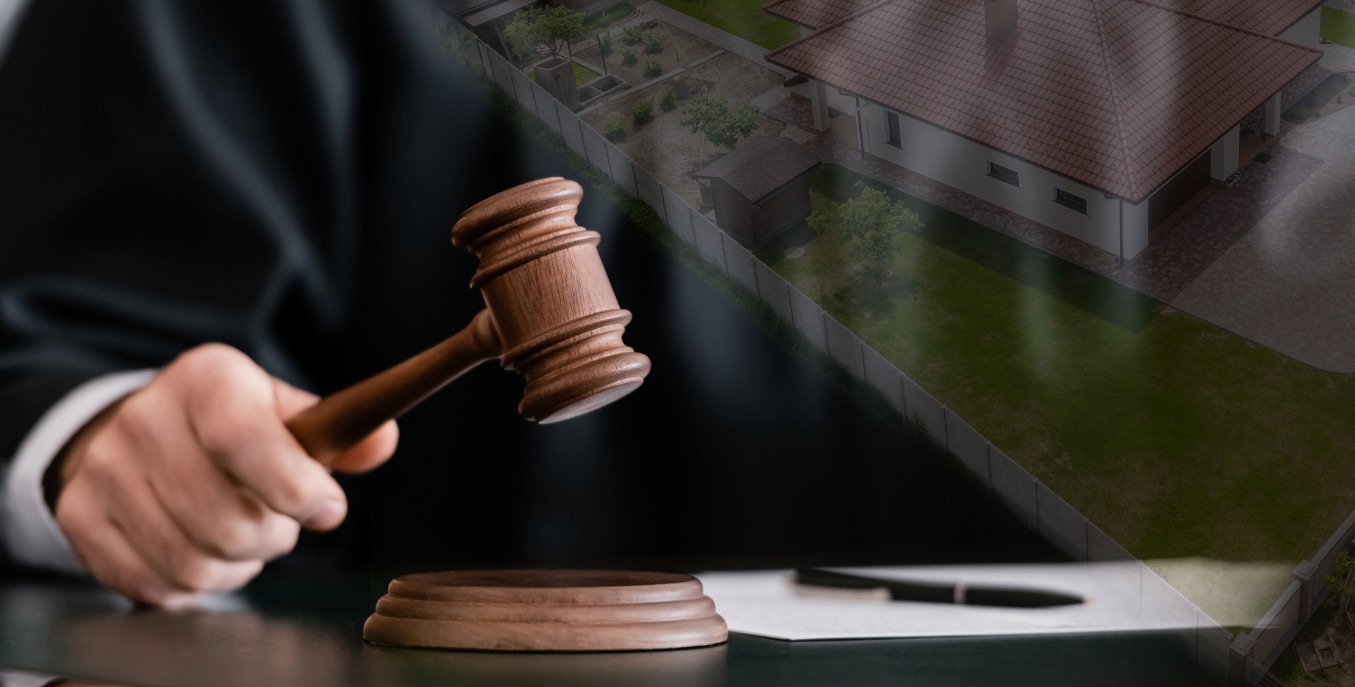
When someone purchases a home backing onto government property, they rarely expect a property dispute or a boundary dispute to arise. Unfortunately, government priorities do not always align with homeowners' expectations.
A recent situation in East London, Ontario, reported by CBC News, highlights how quickly a property's appearance can change when government-owned land is involved.
The Formal Boundary
For nearly forty years, homeowners along Idlewood Road have used portions of land behind their homes that are federally owned and adjacent to an agricultural research facility. A wooden fence installed in the 80s by the federal government included some irregular “bump-outs” that were originally shaped around mature trees.
Over the last four decades, residents landscaped the space that was fenced within their yard. They planted gardens and built sheds, including the areas as part of their backyards.
While the residents acknowledge the land is not legally theirs, the issue isn't in the ownership of the land. It's in the disruption of a long-standing arrangement that had gone unchanged for decades.
This decades-long arrangement is now coming to an end as the federal government plans to replace the aged fence with a straight-line chain link fence aligned with the legal property boundary. Forcing homeowners to remove any structures or landscaping that have been built in those “bump-out” areas.
The Bigger Lesson
Across Ontario there are many properties that back onto municipal or Crown land where informal use develops over time. People start to feel like the land is theirs and add fences, gardens, and sheds, these things do not change the legal boundary. When government agencies revisit land use for security, infrastructure, or operational reasons, like in this scenario, informal land arrangements can end very quickly, causing homeowners a great deal of stress.
How Could Protect Your Boundaries Help?
At Protect Your Boundaries, our first piece of advice to homeowners is to always have a copy of your legal land survey available and in your hands before you buy or build.
Protect Your Boundaries helps buyers and homeowners surface this kind of information before assumptions are made. The legal land survey of these properties would have shown:
- The legal boundary does not follow the existing fence line
- The backyard use extends onto Crown land
- The fence reflects an informal accommodation, not a boundary agreement
- Any structures built beyond the boundary are at risk.
The Bottom Line
Too many homeowners invest in properties without fully understanding the legal realities of the land they’re buying. This lack of clarity can put you at risk if you invest in maintaining or building on land that was never legally yours to begin with.
Fences and familiarity do not define your boundaries. Only a legal land survey plan can do that. Understanding where your property legally ends before you buy, build, or invest isn't pessimistic; it's practical.
This post is based on reporting originally published by CBC News. For full details on the London Crown Land dispute, click here.
Related articles:
Good Fences Make Good Neighbours: DIY Fence Maintenance to Protect Your Boundaries.








Protect Your Boundaries Inc. is a licensed member of the Association of Ontario Land Surveyors, and is entitled to provide cadastral surveying services to the public of the Province of Ontario in accordance with the provisions of the Surveyors Act R.S.O. 1990, Chapter S29.